NYUAD CGSB · Artist-in-Residence 2024–2025
The Archive That Swims, Reproduces & Outlives Us
Storing cultural archives in zebrafish DNA. Building a temple where the archive swims, reproduces, and outlives us all.

Chapter 01
The Problem Nobody Saw Coming
Here’s a scary thought: the photo you took yesterday? The one on your phone? It’s already dying.
Not the memory — the actual file. Every hard drive fails. Every USB stick degrades. Every cloud server needs electricity to keep breathing. The average lifespan of a digital file you’re not actively maintaining is about three to five years.
Your great-grandchildren won’t be scrolling through your Instagram. They’ll be looking at… nothing.
Henry Tan — an artist from Bangkok working at the intersection of art and biology — was looking at a fragile art archive from Abu Dhabi and realized: these documents are one fire away from being gone forever.
He needed a storage medium that could last not decades, not centuries, but thousands of years. So he looked at nature’s own storage system. The one that’s been working for 3.5 billion years without a single software update.
DNA.
Chapter 02
The Medium That Outlived the Dinosaurs
DNA is the OG hard drive. It stores the blueprint for every living thing on Earth in a language made of just four letters: A, C, G, and T.
Density: one gram of DNA can store 117 exabytes. That’s every movie, every song, every Wikipedia article — in a teaspoon.
Longevity: we’ve read DNA from specimens 50,000 years old. Mammoth DNA. Still readable. After 50 millennia.
Self-repair: living organisms actively maintain and repair their DNA. Try getting your MacBook to do that.
The math was irresistible. If you could translate digital data into DNA code, you’d have a storage medium that literally maintains itself, reproduces itself, and can survive ice ages.
So Henry needed a plan. A careful one.
Chapter 03
The Translation Problem
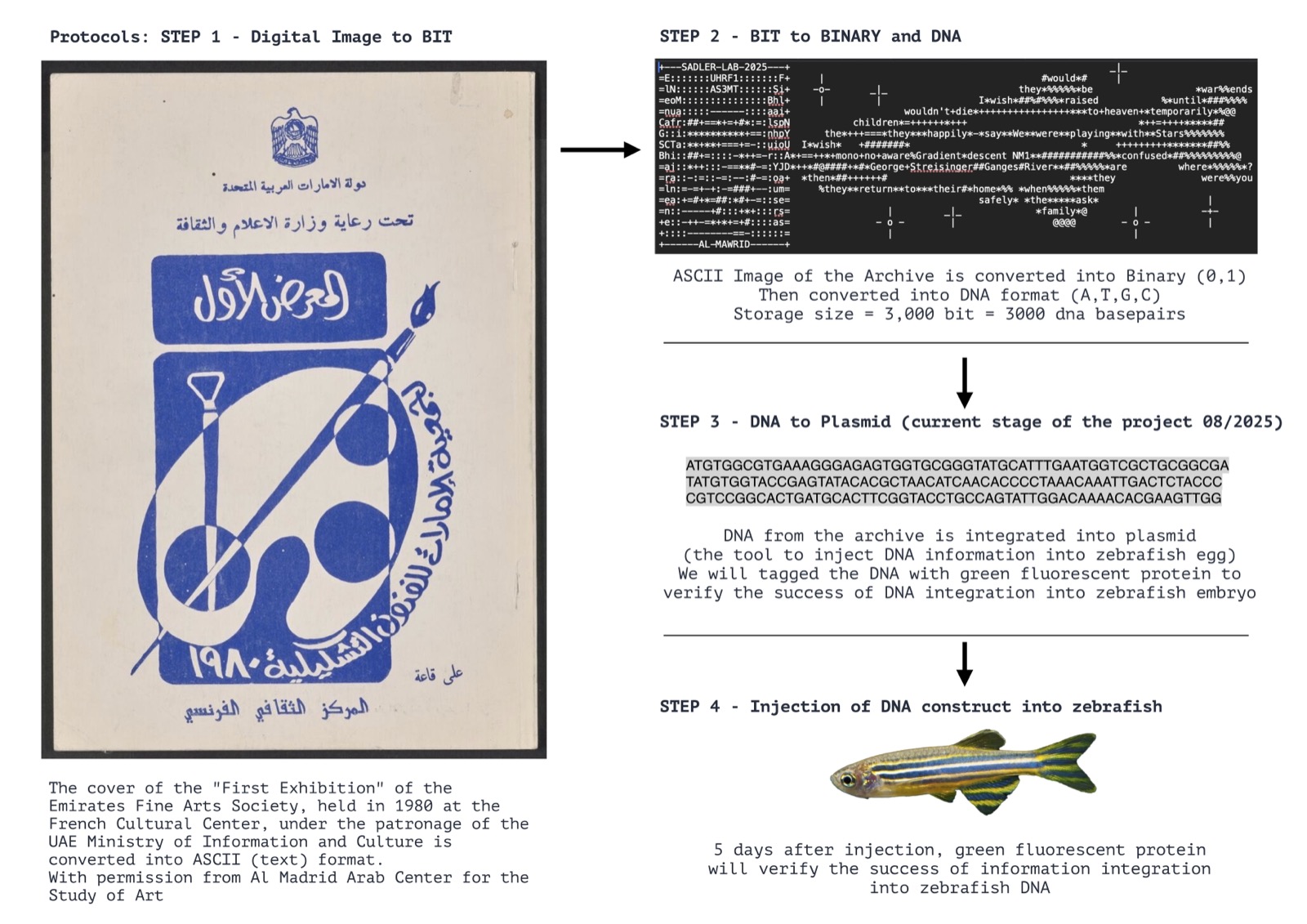
Here’s how you turn a piece of text into DNA. First, convert the text to binary. The letter “A” becomes 01000001. The word “art” becomes 01100001 01110010 01110100.
Then map to DNA letters: 00 → A, 01 → C, 10 → G, 11 → T. Now you have genetic code encoding the word “art.”
That’s why the team built a screening pipeline. Before any encoded DNA touches a living organism, it checks: stop codons that would interrupt protein production, toxic protein motifs, pathogen-like sequences, and GC balance so the DNA doesn’t fold weirdly.
Think of it as a spell-checker, but instead of typos, it checks for “will this accidentally kill the fish.”
Chapter 04
The Quantum Part
DNA isn’t perfect. When fish reproduce, about 1% of the bases get swapped, deleted, or inserted. Over generations, your encoded catalog turns into gibberish.
The simple approach: make 3 copies. If one gets damaged, you have two backups. 97% accuracy with 3× overhead.
But Henry went bigger. He borrowed from quantum computing.
Quantum computers use surface code error correction — a 2D grid with clever math to detect and fix errors. Henry adapted this for DNA, mapping “X errors” (bit flips) and “Z errors” (phase flips) to actual chemical mutations.
Then he ran Monte Carlo simulations — millions of virtual fish over millions of generations.
A quantum error correction code, running in a fish, protecting art from Abu Dhabi. The universe is strange.
Chapter 05
Putting It In The Fish
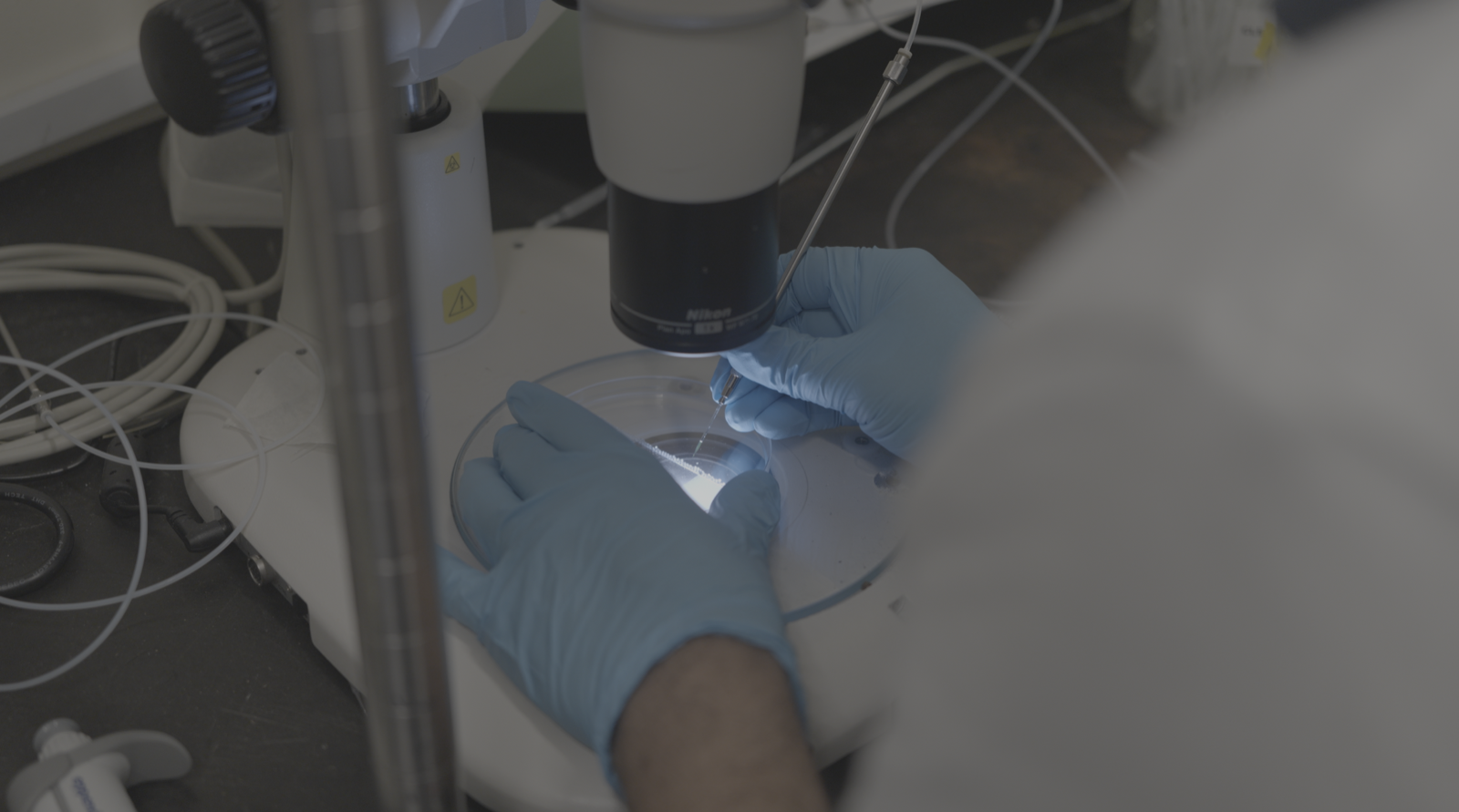
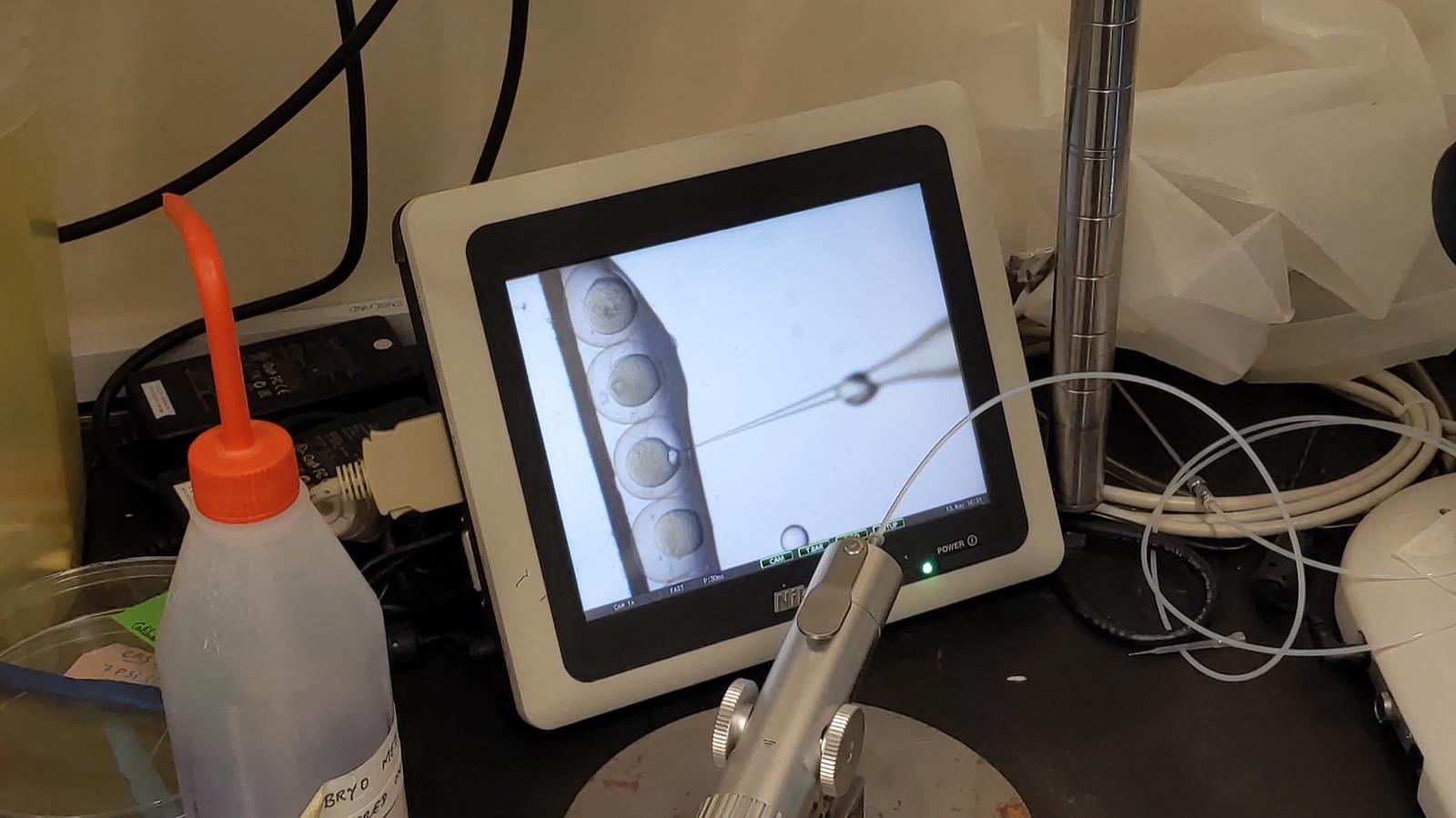
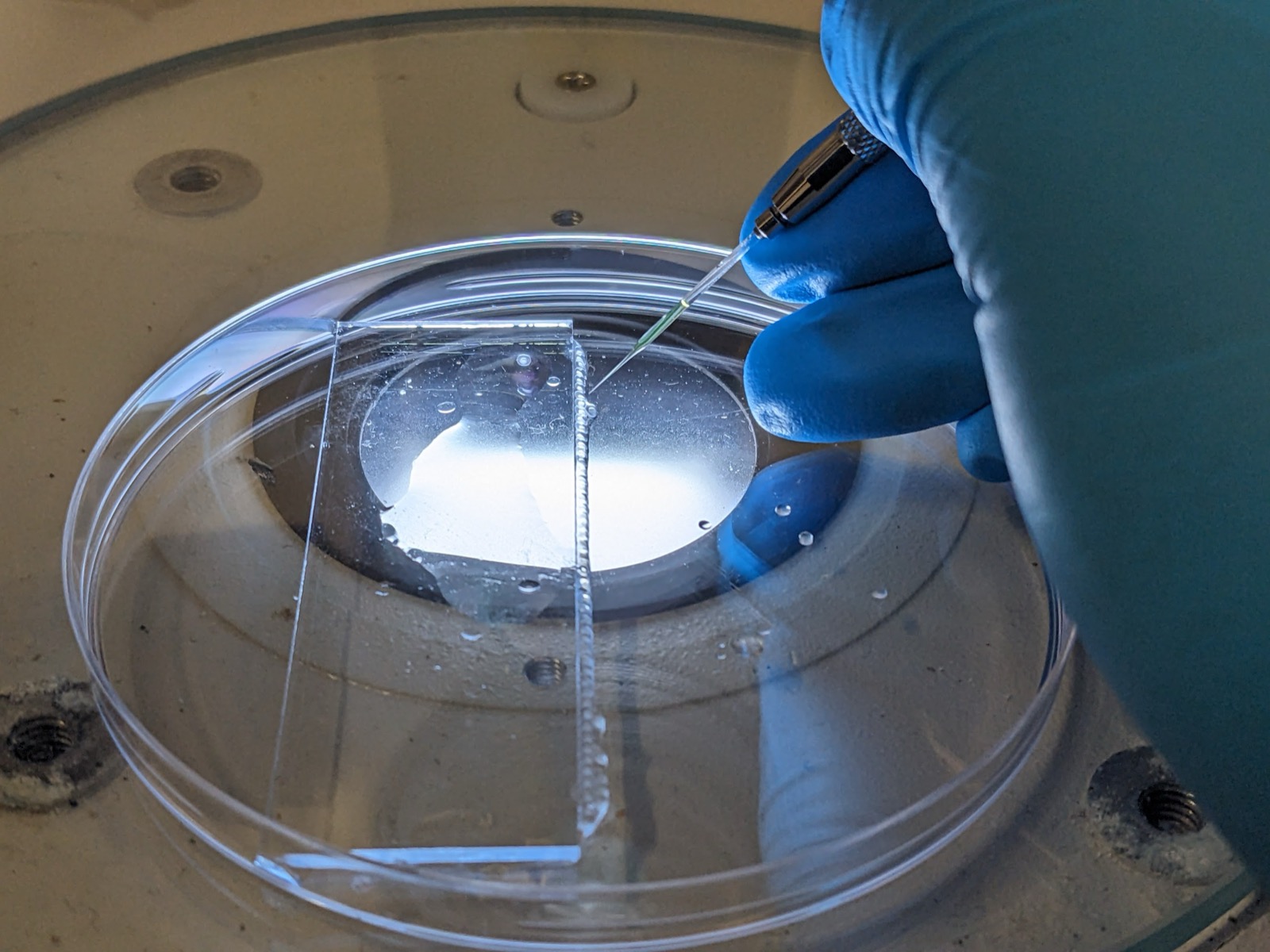
You inject encoded DNA into a zebrafish embryo at the one-cell stage — a fertilized egg that hasn’t decided what it’s going to be yet.
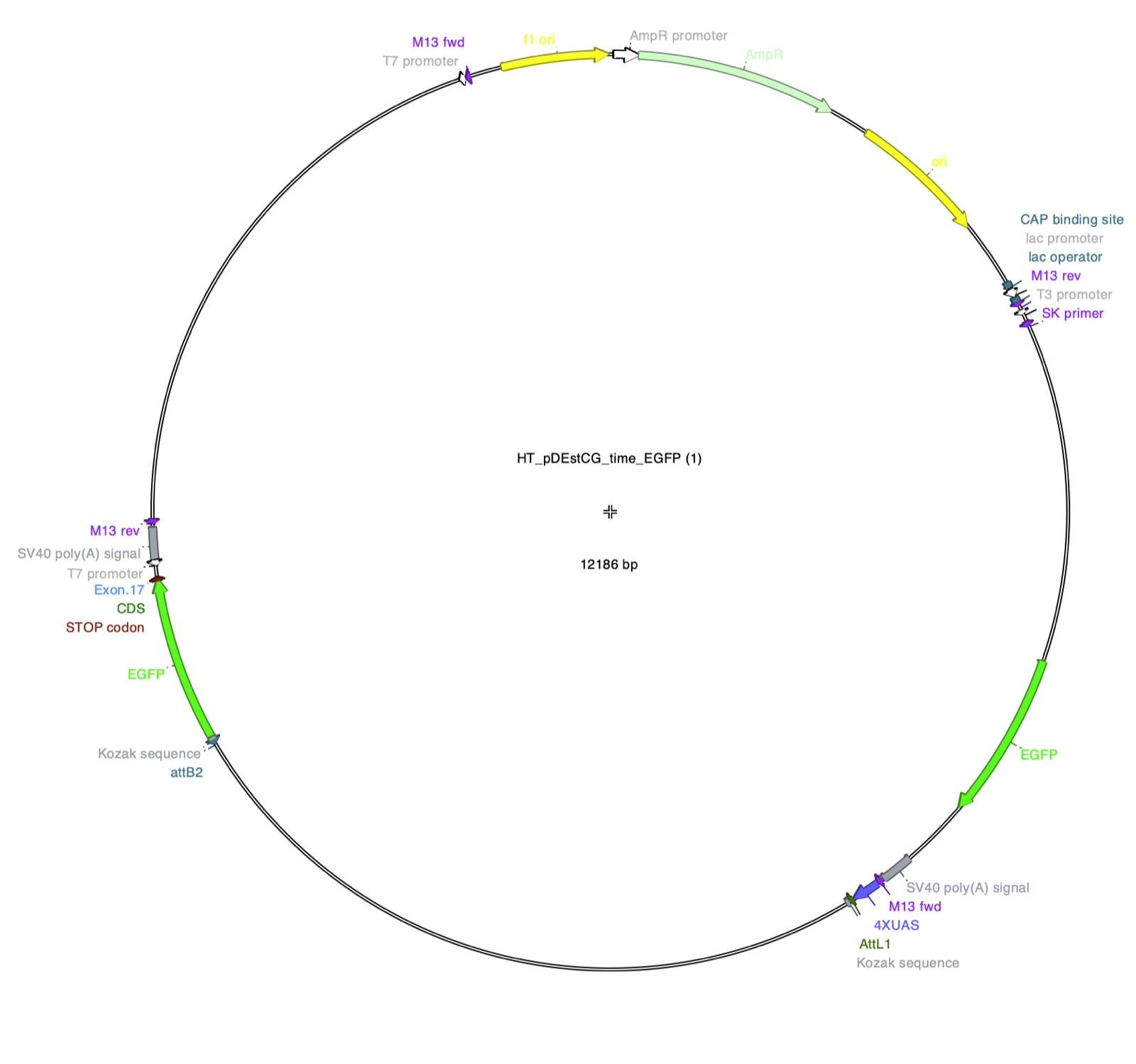
The tool: Tol2 transposon — molecular cut-and-paste. It inserts your sequence into the fish’s genome.
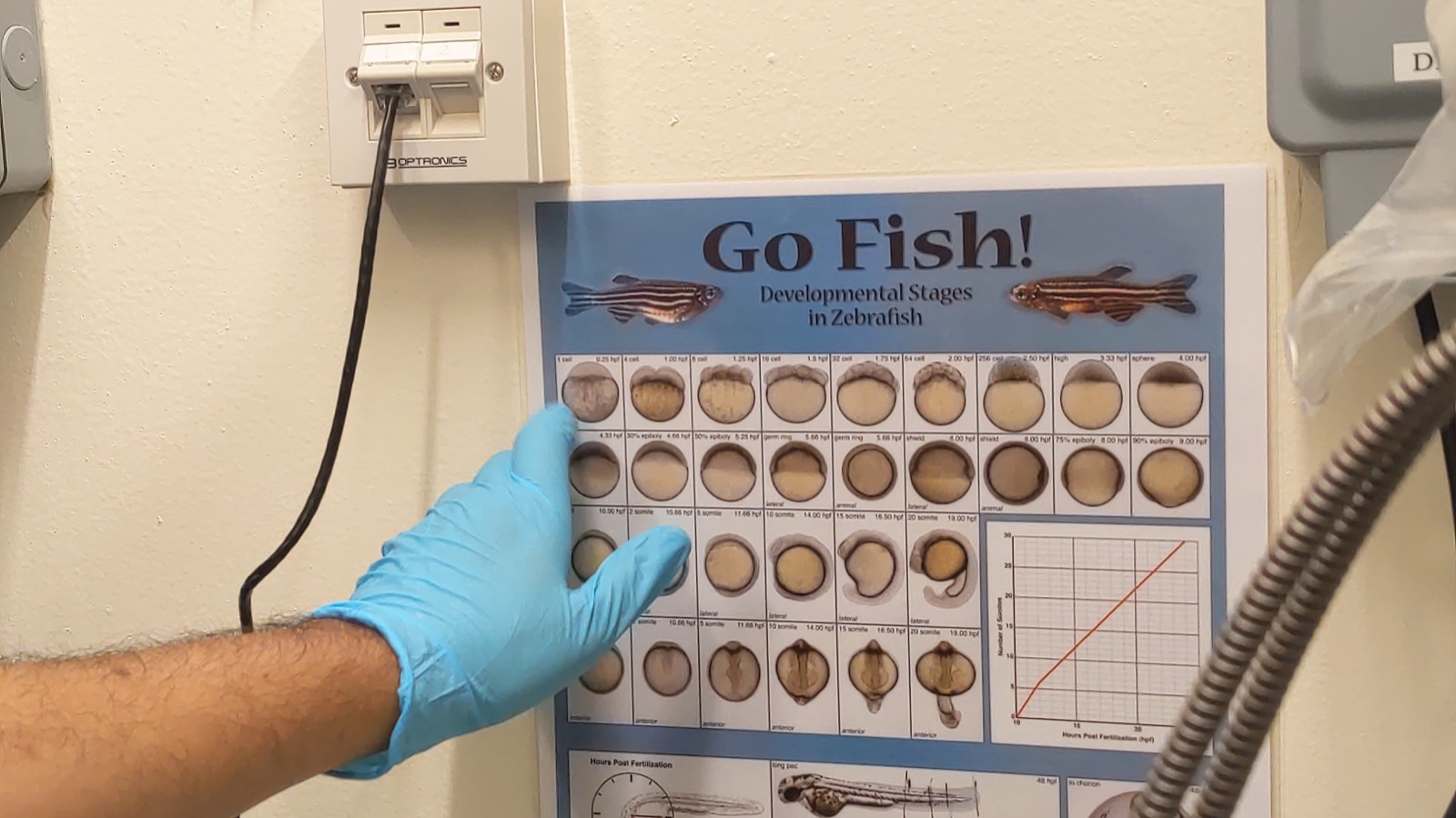
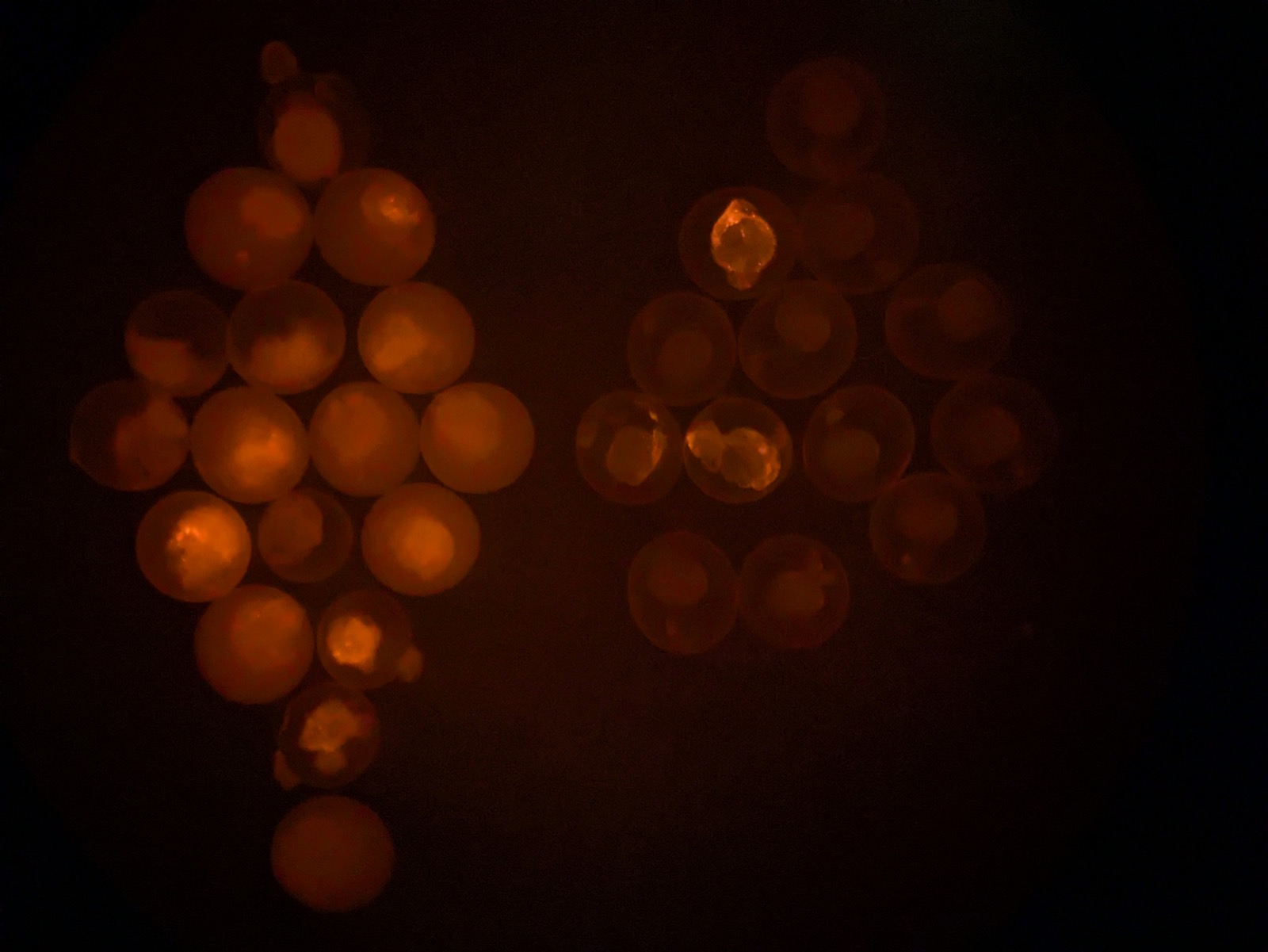
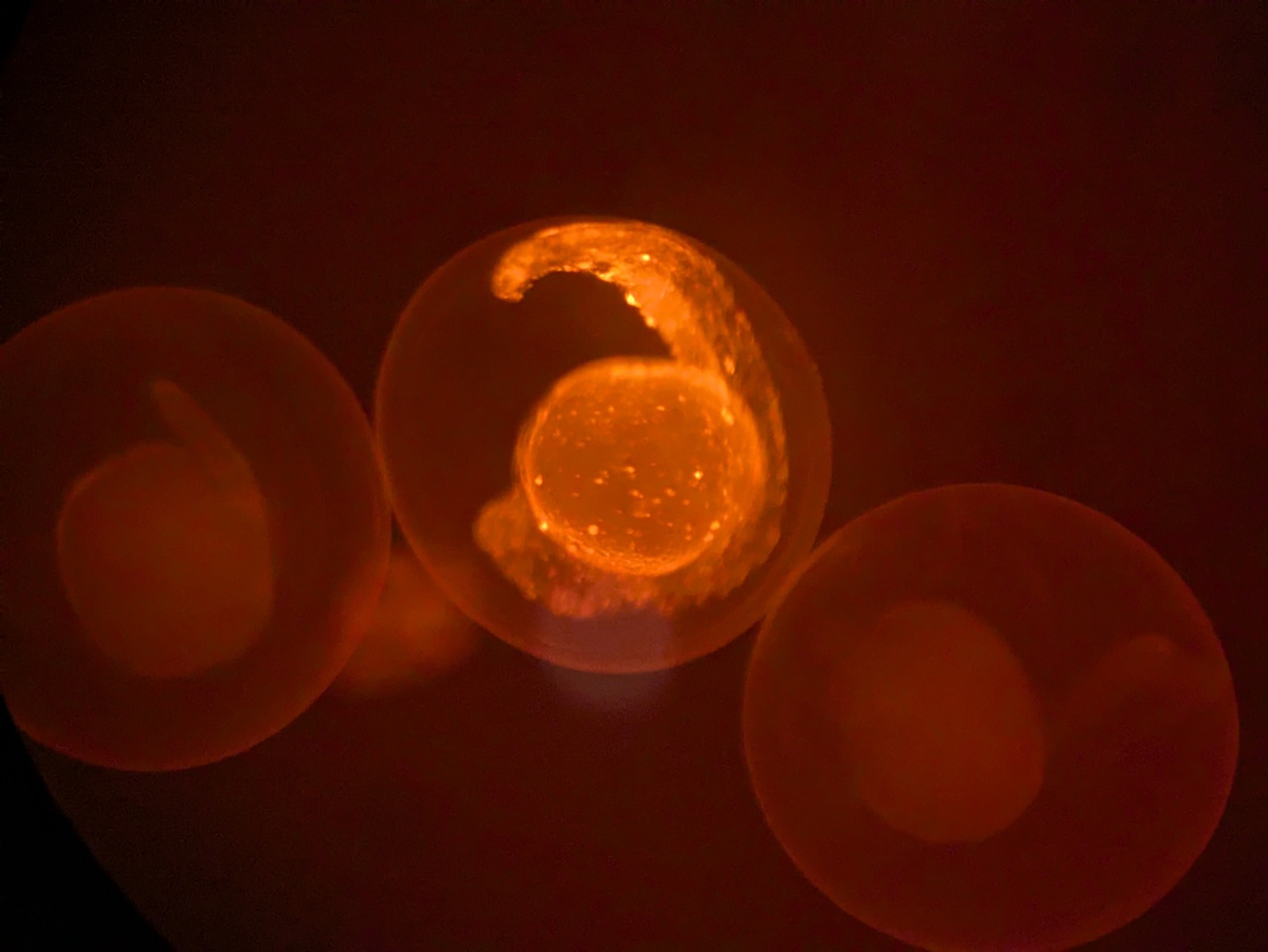
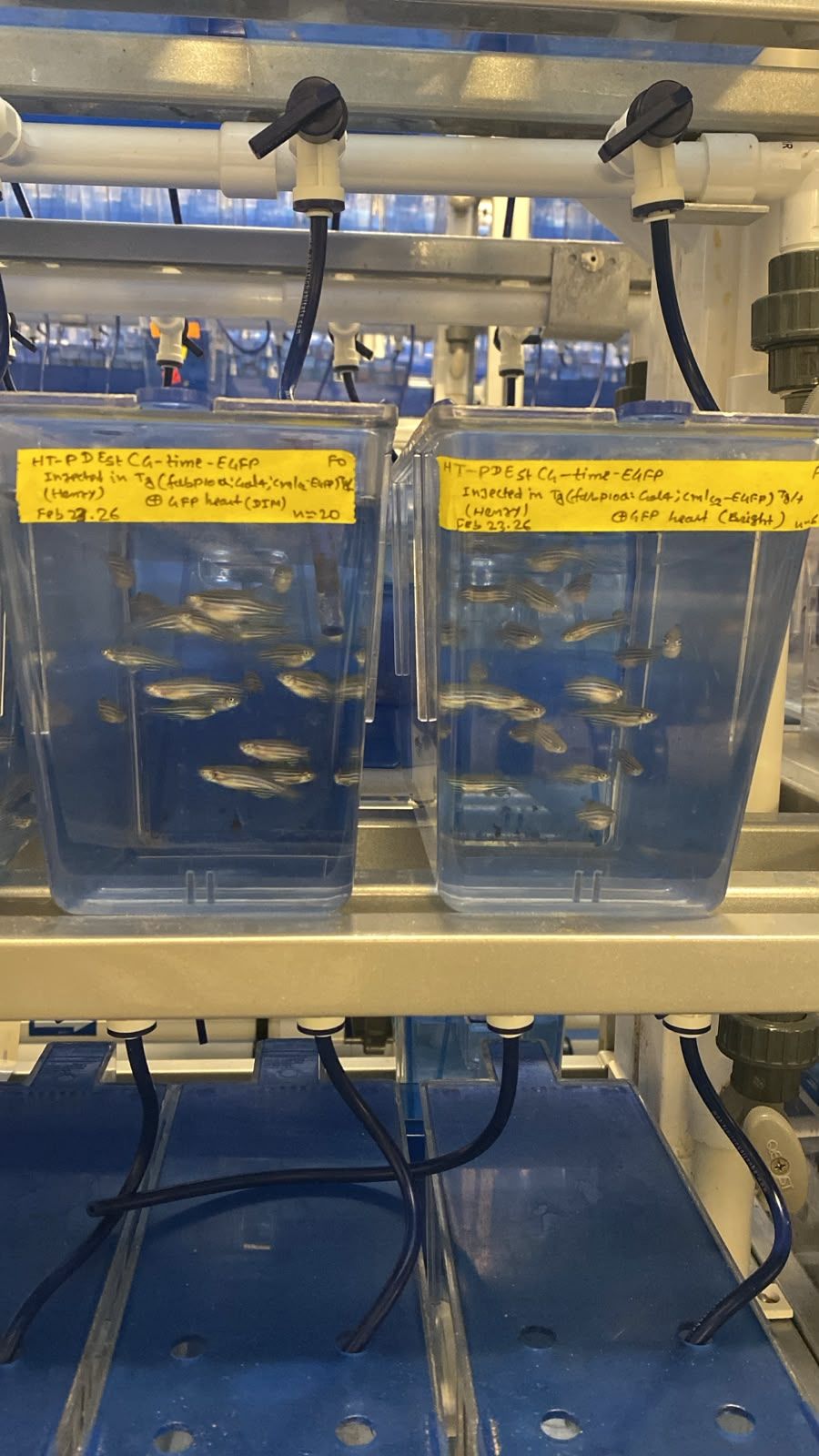
Two designs — fusion and P2A — both worked. Some fish glow, some don’t. The glowing ones? Those are your data carriers.
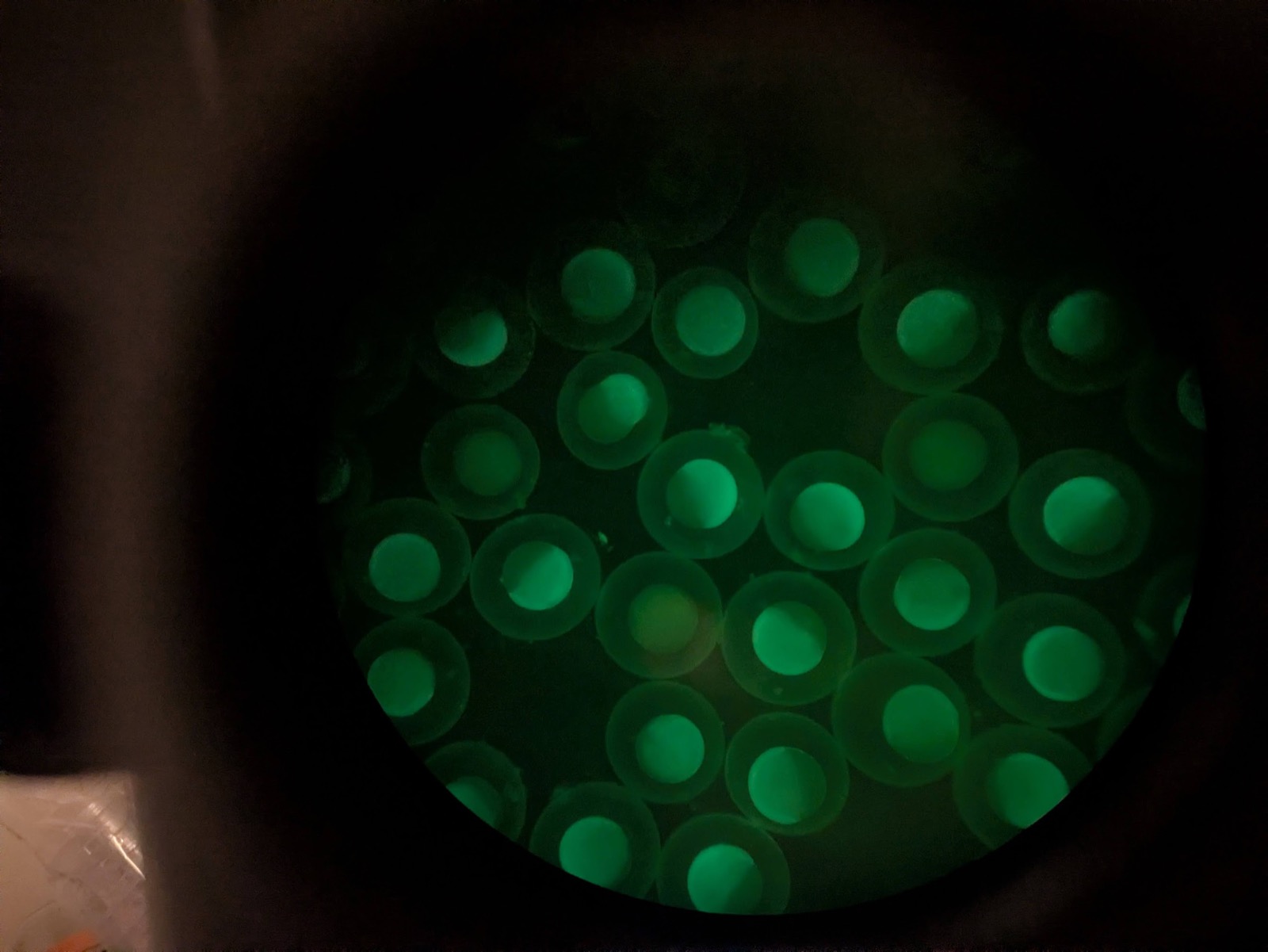
Breed them. Two generations later, sequence the DNA. Did the data survive?
The answer was yes.
Chapter 06
The Al Mawrid Archive
So what exactly got encoded?
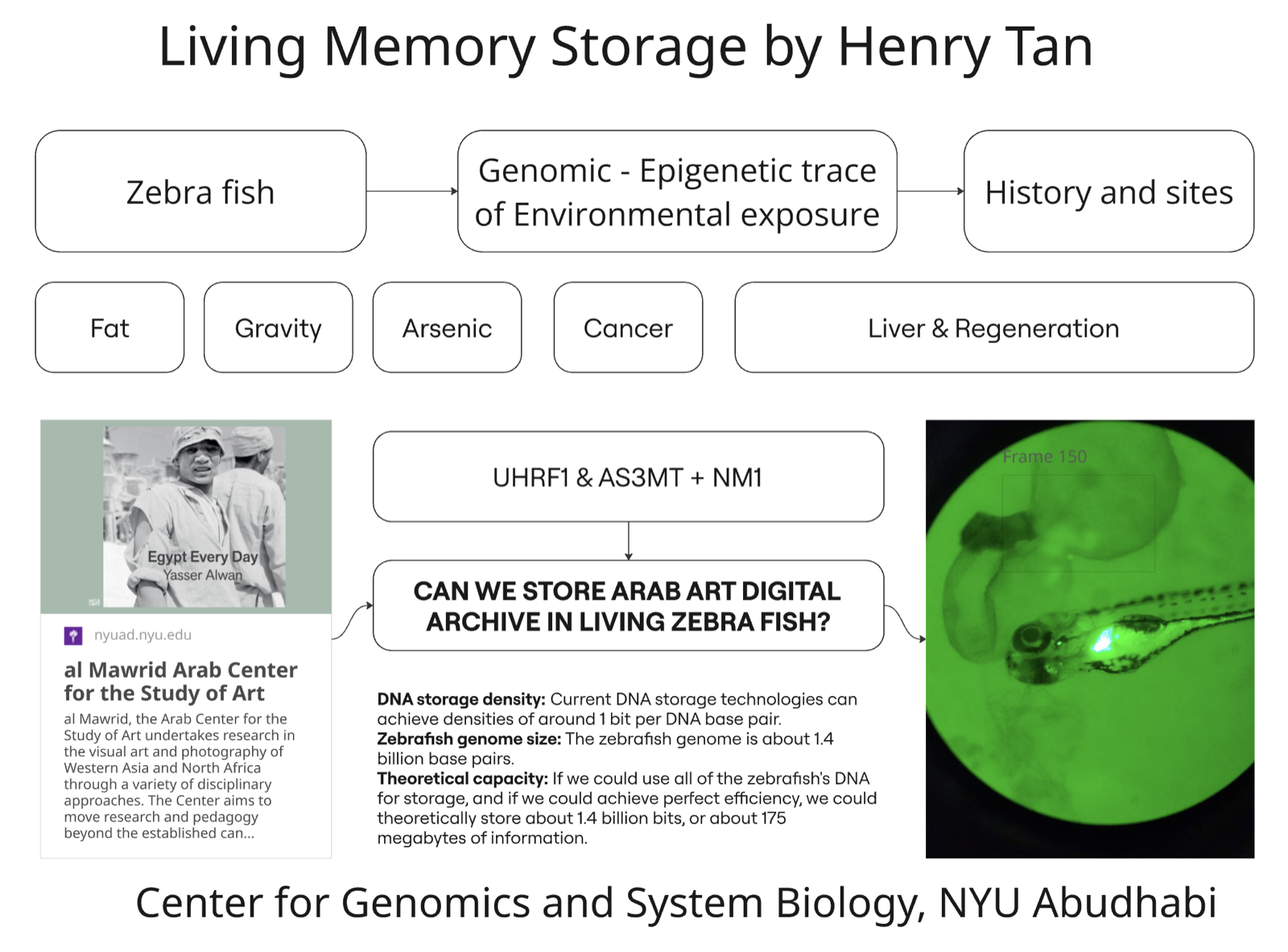
The Al Mawrid Arab Center for the Study of Art at NYU Abu Dhabi collects foundational documents of modern Arab art history. Catalogs. Exhibition records. Artist statements.
One particularly precious item: the catalog from the First Exhibition of the Emirates Fine Arts Society, Abu Dhabi, 1980. Physical copies are rare. Digital copies live on servers.
Now they also live in fish.
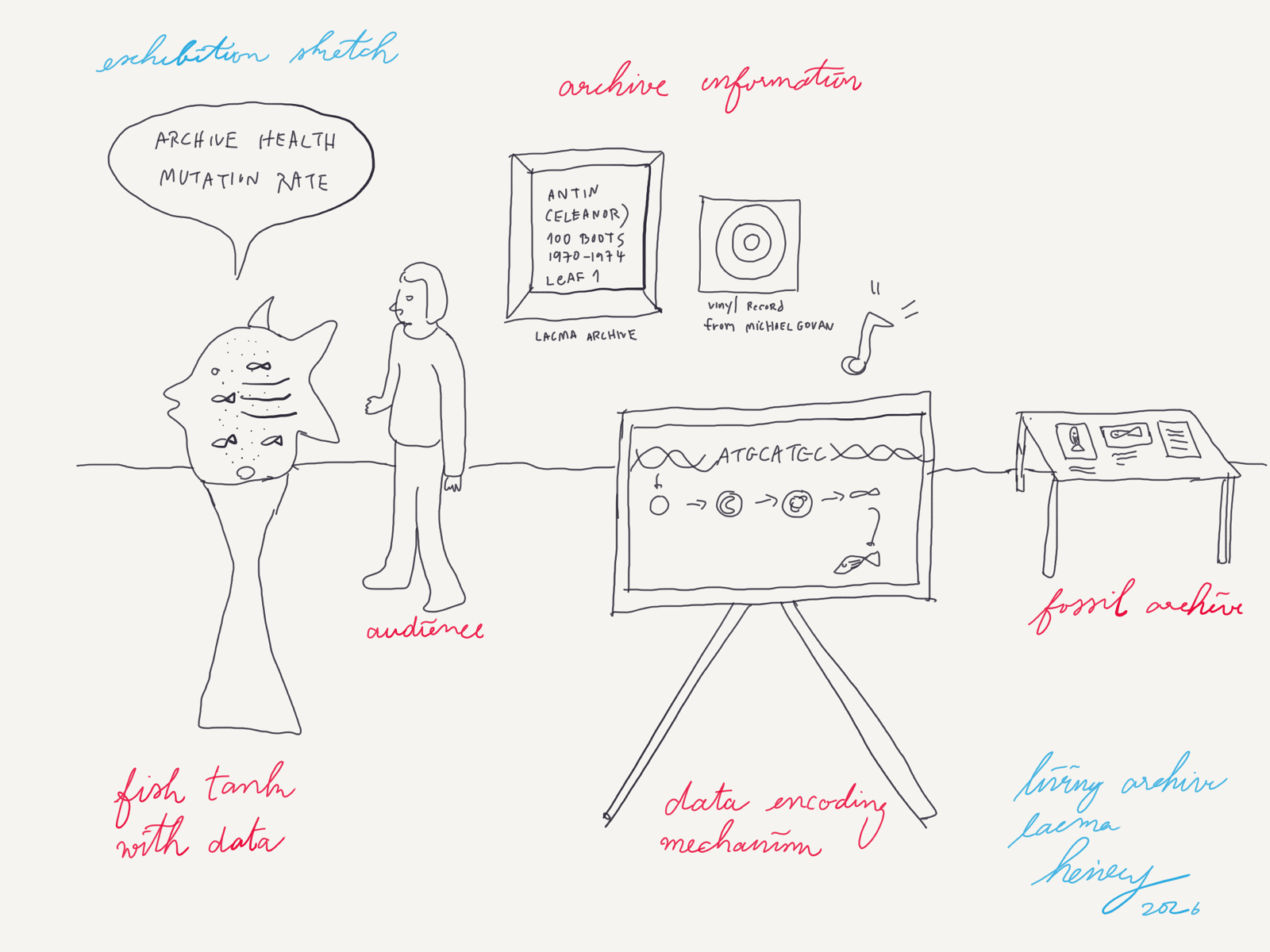
By encoding these materials into living organisms, the project asks: what if the archive wasn’t something you store in a building, but something you keep alive?
Chapter 07
The Ethics
Let’s be real: encoding data into living animals raises questions.
The zebrafish are a standard lab model. The modifications don’t cause harm — the fluorescent reporter is the same protein that makes jellyfish glow, widely used in research. The encoded data is carefully screened to avoid biological disruption.
The project includes protocols for Free, Prior, and Informed Consent (FPIC) — ensuring communities have agency over how their heritage is encoded, stored, and displayed.
Eventually, every fish dies. The transgene might be lost. But that’s partly the point. Henry calls this the “living archive paradigm” — unlike a hard drive that fails suddenly, a living archive degrades gradually, and its degradation is itself meaningful. The imperfection is the feature.
Chapter 08
Why This Matters
Because everything we create is temporary. Our books, photos, videos, music — all of it is one power outage away from oblivion.
DNA has lasted 3.5 billion years. It doesn’t need electricity. It doesn’t need a software company to stay in business. It just needs water, food, and time.
We’re not just building a better backup system. We’re reimagining what an archive can be: not a warehouse of dead objects, but a garden of living memory.
The fish swim. The data persists. The story continues.
And somewhere in Abu Dhabi, a document from 1980 is being carried by a creature that will exist long after all of us are gone.
Field Notes
Lab Documentation
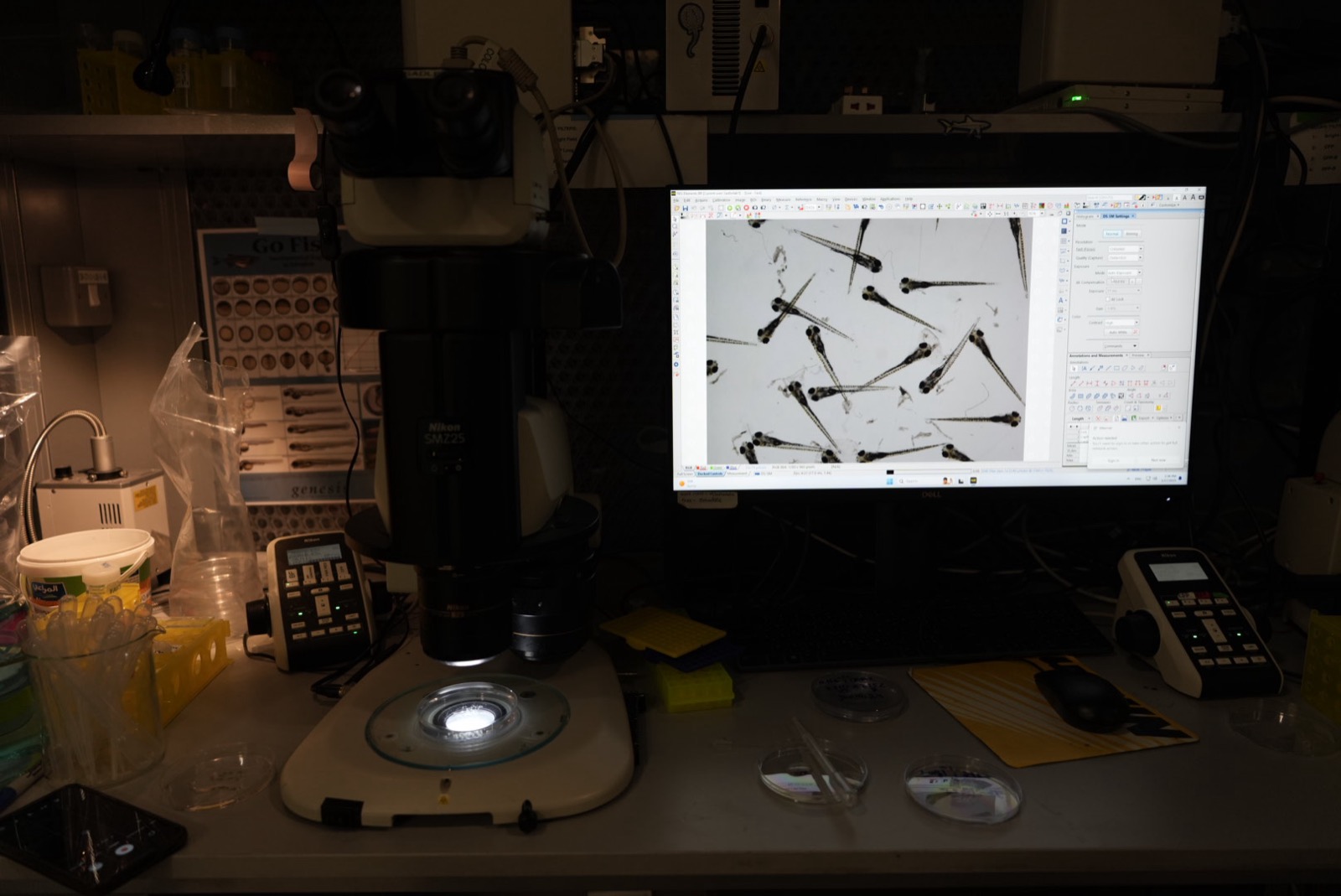
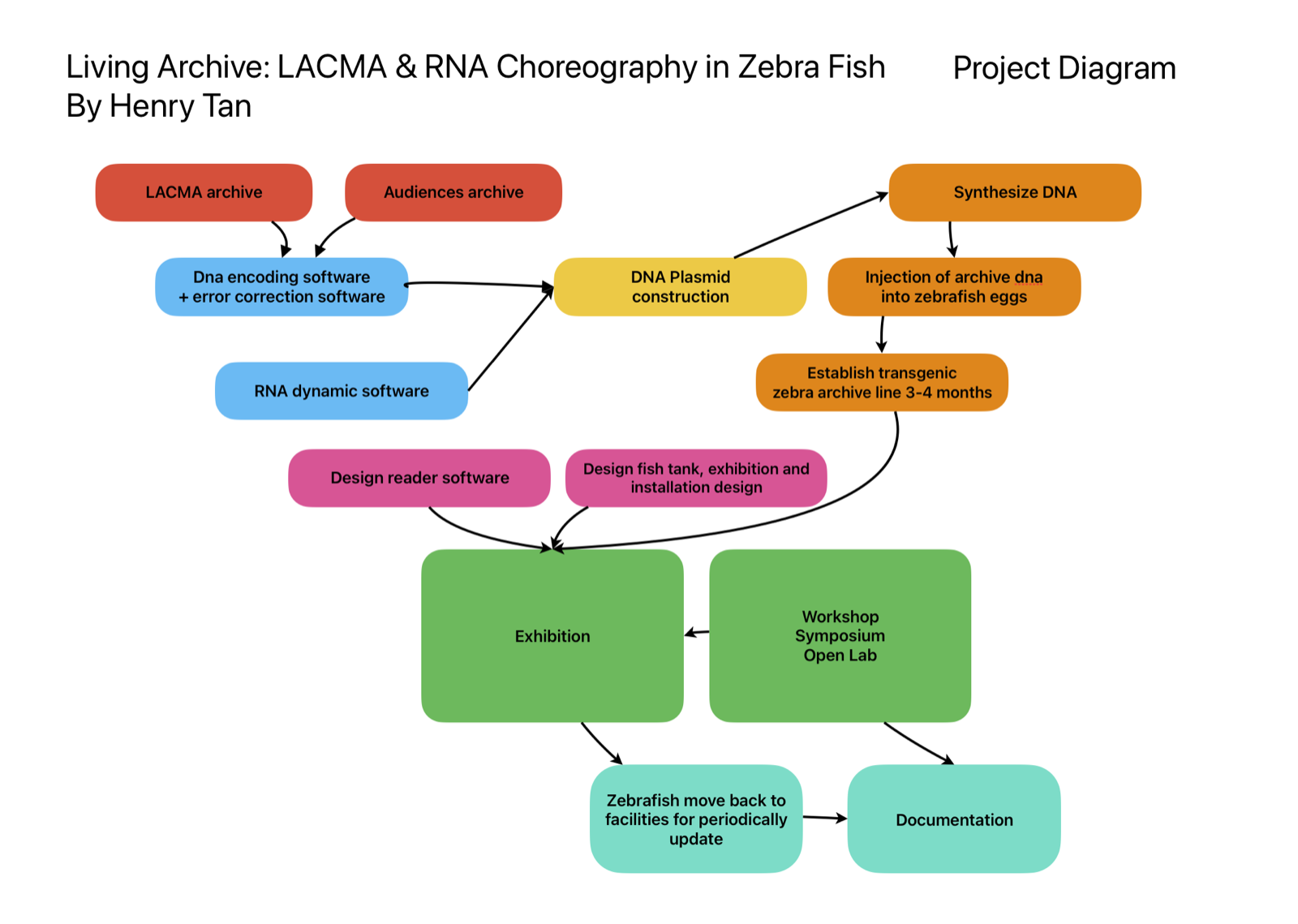
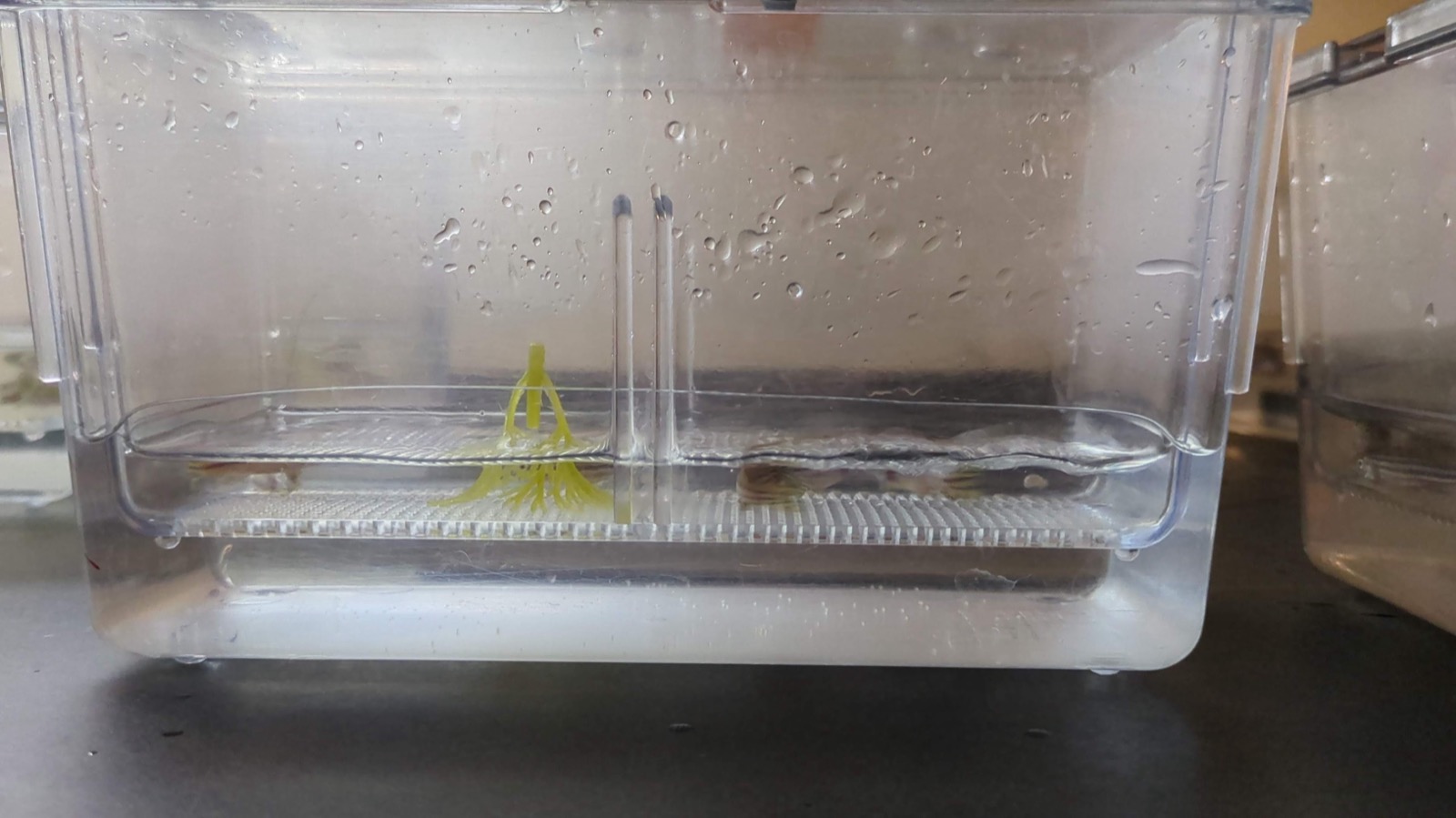
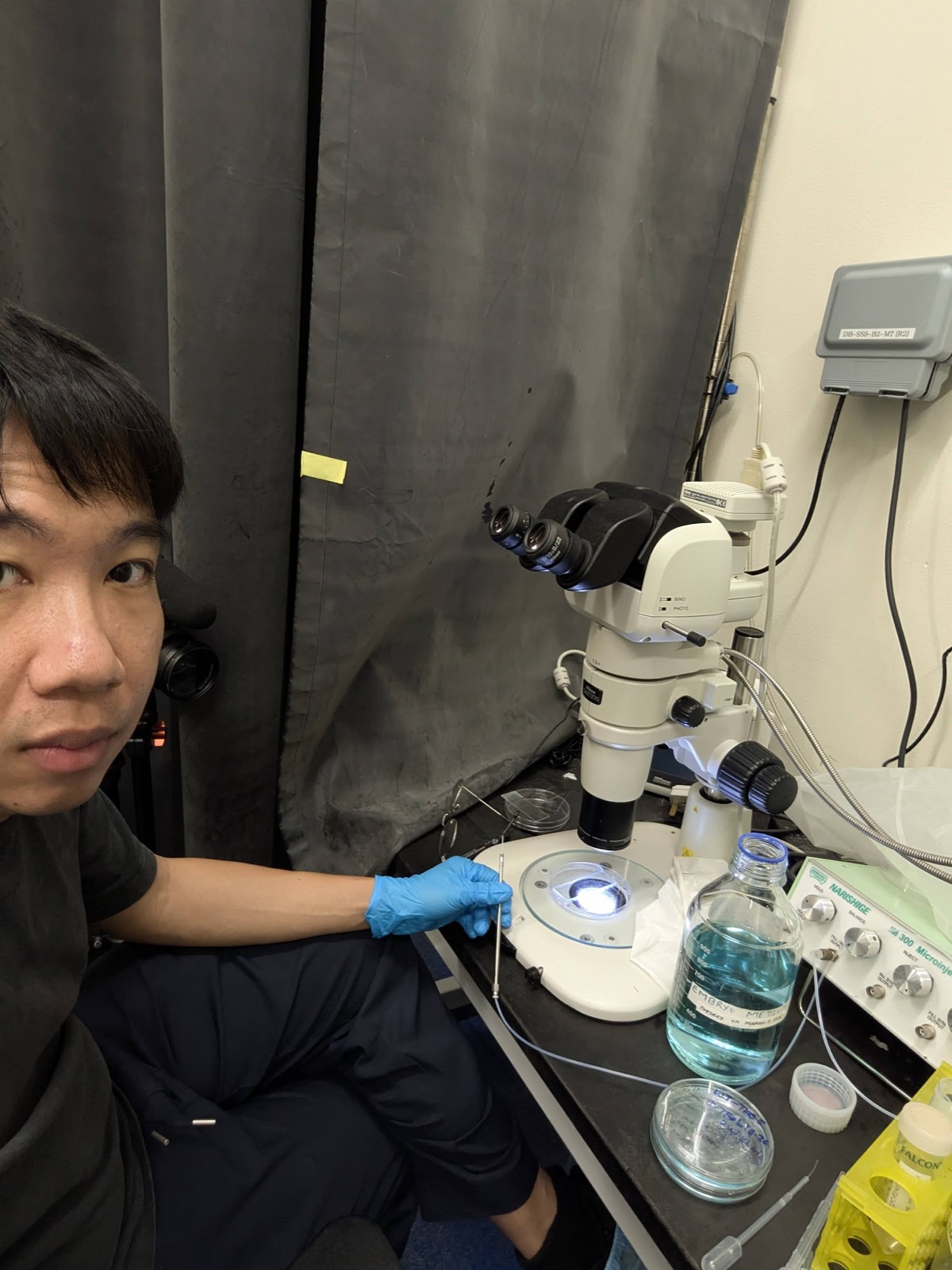
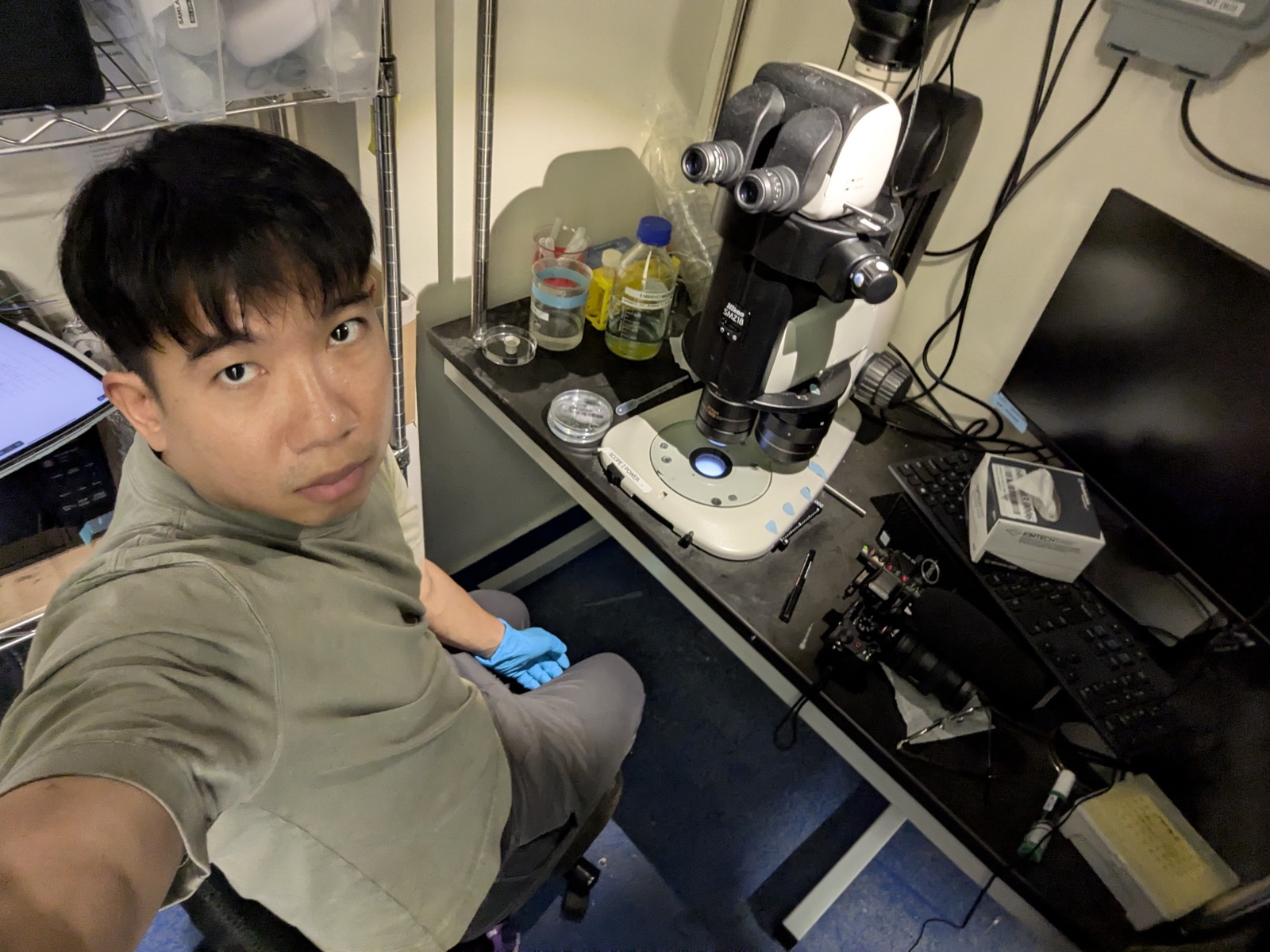
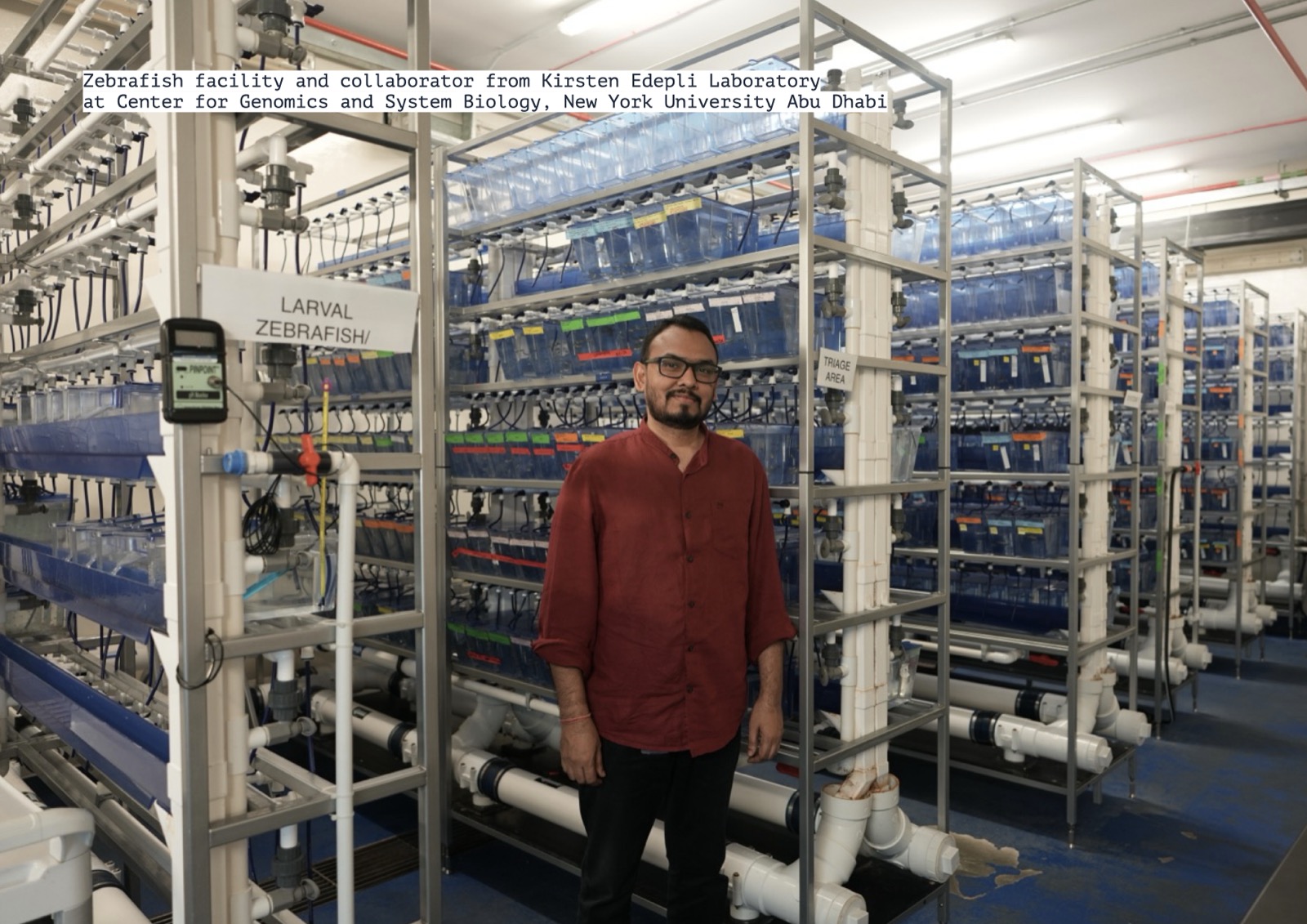
The actual making of a living archive — mating, injection, screening, failure and fluorescence. Photographed and filmed at the NYUAD Center for Genomics and Systems Biology, February 2026, with earlier zebrafish studies from January 2025.
Transgenic Zebrafish, DNA encoding Software, Archive of cover images of the first art exhibition in UAE
Center for Genomics and System Biology, New York University Abu Dhabi
Kirsten Sadler Edepli Laboratory, NYUAD


Explore the project in depth
Encoding Pipeline — try the DNA storage encoder yourself: type text, screen it for stop codons, add quantum error correction, and decode it back.
Publications — the research written three ways: technical (Nature Biotech format), interdisciplinary (Science Advances format), and bioart (Leonardo format). Full manuscripts, downloadable.
Open the Pipeline → Read Publications →Living Archive · Henry Tan & Carmen Koessler · NYUAD CGSB · With thanks to Shashi Ranjan (microinjection), Elena Magnani (plasmid construct design), Kirsten Sadler Edepli and the Sadler Lab, and the Al Mawrid Arab Center for the Study of Art.